7 Affordable Berlin Rooms for Students You Can't Miss
Finding Berlin rooms for students can feel overwhelming. There are hundreds of listings, different types of accommodation and plenty of competition. And when you're new to Berlin, even understanding the rental terms can be confusing.

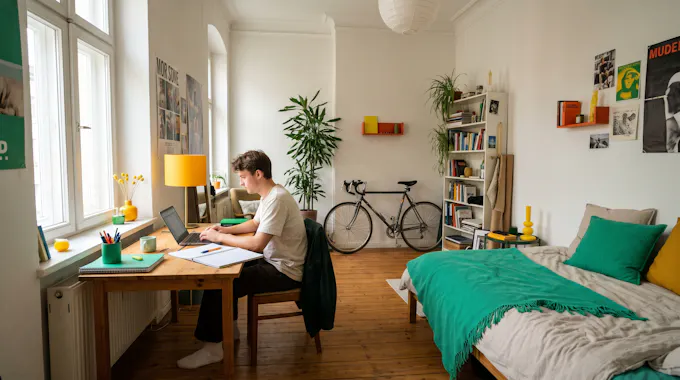
But you don't need a huge budget to start your search. You need to know where to look, which options fit your lifestyle and what to check before signing a contract.
From student residences to shared flats and private studios, here are seven housing options worth exploring.
Hint: Did you know that landlords often ask for your credit score and a self-disclosure form? You can get all of this digitally in just 2 minutes with the bonify Mieterauskunft.
Student accommodation in Berlin: The essentials
Student residences are often among the most affordable options, but waiting lists can be long.
Shared flats (WGs) offer a private bedroom with shared living costs.
Private studios provide more independence but usually cost more.
Kreuzberg, Friedrichshain and Charlottenburg are popular areas, but other districts deserve attention.
Start searching early. Affordable rooms are in high demand.
Check the total rent. Electricity, heating and internet may cost extra.
Never transfer money without verifying the accommodation and rental agreement.
How much does student accommodation in Berlin cost?
Your accommodation will probably be one of your biggest monthly expenses. That's why it's worth planning your budget before searching.
The German Academic Exchange Service (DAAD) estimates that students in Germany generally need around €900–€1,200 per month for living expenses. This includes accommodation, food, transport, insurance and everyday spending.
Berlin can be particularly challenging because affordable rooms attract considerable demand.
The price of your room depends on its location, size, condition and housing type. A room in a student residence will often cost less than a private studio.
What should your student housing budget include?
Rent is only part of the calculation.
In Germany, rental advertisements often distinguish between two prices:
Kaltmiete (cold rent): The basic rent without operating costs.
Warmmiete (warm rent): The basic rent plus specified operating and heating costs.
Electricity and internet may still be separate.
Here's an illustrative monthly budget for a student in Berlin:
Expense
Example budget
Expense
Rent including utilities
Example budget
€550
Expense
Food and groceries
Example budget
€220
Expense
Transport
Example budget
€30
Expense
Phone and internet
Example budget
€30
Expense
Study materials
Example budget
€25
Expense
Personal spending
Example budget
€100
Expense
Total
Example budget
€955
These are example planning amounts, not current average prices. Your actual expenses may be higher. Health insurance, semester contributions and other costs may also apply.
A useful approach is to decide your
7 affordable student accommodation options in Berlin
There is no single best type of student accommodation. Some students want privacy. Others prefer sharing a kitchen and meeting new people.
These seven options cover different budgets, lifestyles and study plans.
1. Studierendenwerk Berlin: Student residences with lower costs
Best for: Students prioritising affordability and university life
The studierendenWERK BERLIN operates student residences across the city. These are often among the first places students check.
Rooms can be furnished or unfurnished. Depending on the residence, you may share a kitchen and bathroom or have a small apartment.
The main advantage is affordability. The main challenge is availability.
Waiting times can exceed a year, and accommodation is not guaranteed when you receive your university admission.
You generally need confirmation of admission or enrolment and payment of your semester fees before applying.
What to know: Apply as soon as you're eligible, keep your application active and search for alternatives at the same time.
Website: https://www.stw.berlin/en/housing/
2. Shared flats (WG): Your own room, shared costs
Best for: Students who want to save money and meet people
A Wohngemeinschaft, usually called a WG, is a shared apartment.
You rent your own bedroom and share facilities such as the kitchen, bathroom and sometimes a living room.
For many students, this offers a useful balance between privacy and affordability.
You can also share certain household expenses, including electricity, internet and cleaning supplies.
But living with other people requires compromise. Cleaning routines, visitors, noise and shared responsibilities matter.
Before moving in, ask how the household works.
Popular platforms include WG-Gesucht and university housing groups.
What to know: Read the listing carefully and check whether you are signing a main tenancy, sublease or another agreement.
3. Student villages: Campus-style accommodation
Best for: Students who enjoy community living
Berlin also has student villages designed around shared student life.
Studentendorf Schlachtensee and Studentendorf Adlershof are two examples worth researching.
These communities combine student accommodation with opportunities to meet other residents.
Depending on the property, accommodation can include individual rooms or shared living arrangements.
The locations may also suit students attending nearby universities or campuses.
Schlachtensee offers access to green surroundings, while Adlershof is especially interesting for students connected to the science and university campus.
What to know: Check eligibility, current prices, availability and travel times before applying.
4. Private student residences: More facilities and convenience
Best for: Students who prefer organised, furnished accommodation
Private student residences provide another alternative to traditional dormitories.
Providers such as THE FIZZ offer student-focused accommodation in Berlin.
Depending on the building, features may include furnished rooms, communal spaces, laundry facilities and internet.
This can simplify moving, especially if you're arriving from another country.
However, private accommodation can cost considerably more than publicly supported student housing.
Compare the full monthly price and check whether additional service charges apply.
What to know: Convenience is valuable, but only when the total cost fits your budget.
5. Furnished rooms: An easier start in Berlin
Best for: International students and short-term stays
Moving to a new city is easier when you don't need to buy furniture immediately.
Furnished rooms often include a bed, desk, wardrobe and basic household equipment.
You can find them through specialist accommodation platforms such as Uniplaces, HousingAnywhere and similar services.
They can be particularly useful for exchange students or people arriving before finding a permanent room.
But furnished accommodation is not automatically affordable.
Some providers charge booking fees, service fees or higher monthly rents.
What to know: Check the cancellation policy, contract duration and all fees before paying.
6. Studio apartments: More privacy and independence
Best for: Students who prefer living alone
A studio apartment in Berlin for students usually combines sleeping, living and sometimes cooking space in one main room.
Unlike a WG, you don't need to share your everyday living space.
That can be helpful when you study from home, work irregular hours or simply prefer quiet surroundings.
The trade-off is cost.
You pay the rent and household expenses yourself. Studios can also require a higher initial budget.
In German property listings, search for 1-Zimmer-Wohnung or Apartment.
What to know: Check whether the kitchen is included. Some unfurnished German apartments do not have a fitted kitchen.
7. Temporary sublets: A flexible first home
Best for: Students who need accommodation quickly
A temporary sublet, called Zwischenmiete, can help when your preferred accommodation isn't available yet.
Someone may rent out their room while studying abroad, travelling or temporarily living elsewhere.
These arrangements can last several weeks or months.
The advantage is flexibility. You can arrive in Berlin and continue searching locally.
But temporary housing also creates uncertainty.
Make sure the sublet is permitted and that you receive a written agreement.
What to know: Confirm whether registration at the address (Anmeldung) is possible. This can be particularly important when moving to Germany.
Accommodation
Main advantage
Main drawback
Accommodation
Student residence
Main advantage
Often affordable
Main drawback
Long waiting lists
Accommodation
Shared flat (WG)
Main advantage
Shared costs and social life
Main drawback
Less privacy
Accommodation
Student village
Main advantage
Student community
Main drawback
Location and availability
Accommodation
Private residence
Main advantage
Convenience and facilities
Main drawback
Potentially higher costs
Accommodation
Furnished room
Main advantage
Easy move-in
Main drawback
Extra fees or higher rent
Accommodation
Studio apartment
Main advantage
Independence
Main drawback
Higher individual costs
Accommodation
Temporary sublet
Main advantage
Flexible move-in
Main drawback
Limited contract duration
The best choice depends on your budget, study location and how long you plan to stay.
Best Berlin neighbourhoods for students
Berlin has many different neighbourhoods. Some are lively and central. Others are quieter, greener or better suited to smaller budgets.
Don't choose an area based on its reputation alone.
A good student neighbourhood should make everyday life manageable.
Kreuzberg: Culture, cafés and city life
Kreuzberg is one of Berlin's best-known neighbourhoods.
You'll find international restaurants, cafés, independent shops and plenty of cultural activity.
Areas around Bergmannkiez and Graefekiez are popular for their streets, cafés and local atmosphere.
Kreuzberg also offers useful public transport connections.
However, its popularity means finding affordable rooms can be difficult.
Best for: Students who enjoy busy neighbourhoods and cultural variety.
Friedrichshain: Social life and good transport connections
Friedrichshain attracts students and young professionals who enjoy an active neighbourhood.
The area around Boxhagener Platz is known for cafés, restaurants and local shops.
You'll also find parks, cultural venues and connections to other parts of Berlin.
Shared flats are common in the area, but that doesn't guarantee low rents.
Best for: Students who want an active social life and urban surroundings.
Charlottenburg: University access and a calmer atmosphere
Charlottenburg can be especially practical for students attending Technische Universität Berlin or nearby institutions.
It combines shopping streets, residential neighbourhoods and green spaces.
Some areas feel quieter than Kreuzberg or Friedrichshain.
Transport connections are generally good, although they vary by location.
Best for: Students who value university access and a more relaxed residential setting.
Neukölln: International atmosphere and varied housing
Neukölln offers a mixture of busy streets, cafés and residential areas.
Northern Neukölln is particularly popular with international residents.
Other parts of the district have a different atmosphere and may offer additional housing options.
Rent levels vary considerably.
Best for: Students who enjoy multicultural neighbourhoods and want several areas to explore.
Wedding: A practical alternative to central hotspots
Wedding is worth considering if central neighbourhoods exceed your budget.
It has residential streets, local shops and connections to other parts of Berlin.
Some locations offer convenient access to university campuses.
However, prices and transport options differ from street to street.
Best for: Students looking beyond the most heavily advertised neighbourhoods.
Adlershof: Convenient for science and technology students
Adlershof is home to an important university and research campus.
Students attending courses nearby may appreciate shorter journeys.
The area is less central than Kreuzberg or Mitte but has public transport connections.
Best for: Students studying or working around the Adlershof campus.
How to find affordable rooms in Berlin
Finding accommodation takes more than opening one website.
The strongest approach combines online platforms, university resources and personal contacts.
Start with student housing platforms
Several websites focus on student accommodation in Berlin, Germany.
Useful starting points include:
studierendenWERK BERLIN: Public student residences and housing information.
WG-Gesucht: Shared flats, rooms and sublets.
HousingAnywhere: Rooms and apartments, including options for international students.
Uniplaces: Furnished student accommodation and private rentals.
THE FIZZ: Private student accommodation.
ImmobilienScout24: General rental listings, including smaller apartments.
Different platforms have different booking processes and fees.
Compare them before committing.
Search in German as well as English
English-language listings can be convenient, but they don't cover every opportunity.
Try these German search terms:
WG-Zimmer Berlin
Studentenwohnung Berlin
Studentenwohnheim Berlin
Zimmer mieten Berlin
Möbliertes Zimmer Berlin
Zwischenmiete Berlin
1-Zimmer-Wohnung Berlin
Searching in both languages gives you a wider range of results.
Use social media and university networks
Student groups can be useful when searching for accommodation.
University communities, student associations and local housing groups sometimes share room offers.
You can also ask classmates or colleagues about upcoming vacancies.
But don't assume a listing is genuine simply because it appears in a familiar group.
Always verify the person offering the room.
Set up notifications
Affordable listings can attract many messages.
Create alerts with your maximum rent, preferred neighbourhoods and move-in date.
Respond promptly when a suitable room appears.
A short, friendly introduction is usually better than a long generic message.
What documents do you need to rent a student room in Berlin?
Requirements depend on the landlord and accommodation type.
Student residences may ask for different documents than private landlords.
Common requests include:
Passport or identity document
University admission or enrolment certificate
Proof of income or financial support
Rental application or self-disclosure form
Guarantor information, where accepted
Creditworthiness information, where relevant
You won't necessarily need every document.
What if you don't have a SCHUFA history?
SCHUFA is a German credit agency. Some landlords use creditworthiness information when evaluating rental applications.
If you've recently moved to Germany, you may have little or no German credit history.
That doesn't automatically prevent you from renting.
Ask which alternative documents the landlord accepts. Depending on the situation, proof of financial support, a scholarship or a guarantor may help.
Avoid sending sensitive documents to unknown contacts before verifying the listing.
What should you check during a room viewing?
A room can look great in photos but feel different in person.
Whenever possible, inspect it before signing.
Check the room itself
Look at the windows, heating, walls and furniture.
Check for moisture or visible mould.
Ask whether the room includes everything shown in the advertisement.
If the room is furnished, request a list of included items.
Meet your potential flatmates
For a WG, the people matter as much as the room.
Ask about cleaning routines, guests, shared expenses and everyday schedules.
You don't need identical lifestyles, but you should feel comfortable with the arrangement.
Understand the total rent
Ask whether the price includes heating, electricity and internet.
Also check whether there are additional fees.
A room advertised at €500 may cost more each month if several expenses are excluded.
Check the rental agreement
Before signing, understand the contract duration, notice period, deposit and payment schedule.
For ordinary residential tenancies covered by Section 551 of the German Civil Code, the security deposit is generally limited to three months of basic rent. Cash deposits can be paid in three monthly instalments.
Some student housing arrangements have special rules, so check the agreement carefully.
How to avoid student housing scams in Berlin
Unfortunately, housing scams are a real concern.
Students arriving from abroad can be especially vulnerable because they may need accommodation before reaching Germany.
A low price or attractive photo doesn't prove a listing is genuine.
Warning signs to watch for
Be careful when someone:
Demands an immediate transfer to secure a room
Refuses to provide verifiable property details
Claims they cannot arrange any reasonable viewing or verification
Uses inconsistent names or payment information
Sends a suspicious payment link
Pressures you to make a decision without reading the contract
A legitimate rental process should give you enough information to understand who you're dealing with.
If something feels unclear, ask questions before sending money or personal documents.
What about booking from abroad?
Sometimes you need to arrange accommodation before arriving in Berlin.
In that case, use a provider with a clear booking process and check its payment protection and cancellation conditions.
If possible, arrange a live video viewing.
Verify the property's address and the identity or authority of the person renting it out.
How to save money while studying in Berlin
Finding a reasonably priced room is only one part of managing your budget.
Small decisions can also help you control monthly expenses.
Share household costs
In a WG, you may be able to split internet and certain household purchases.
Agree on how shared expenses work before moving in.
Consider neighbourhoods outside the centre
A longer journey may be worthwhile if the rent is significantly lower.
But check the actual commute.
An affordable room with poor transport connections can become inconvenient.
Use student discounts
Universities and student organisations may offer discounts on food, cultural activities and sports.
Check which benefits are included in your semester contribution.
Plan for one-off expenses
Moving costs can include a deposit, bedding, furniture, household equipment and initial travel expenses.
Set aside money for these costs rather than focusing only on monthly rent.
Keep track of your spending
A simple monthly budget can help you understand where your money goes.
Separate fixed costs such as rent and insurance from flexible expenses such as food and entertainment.
This makes it easier to see how much you can comfortably spend on accommodation.
Prices depend on the accommodation type, neighbourhood and contract.
Public student residences are often among the cheapest options. Shared flats can also be more affordable than renting alone.
Always compare the total monthly cost rather than the basic rent.
Yes, affordable accommodation can be difficult to find.
Student residences have limited capacity, and private listings often receive substantial interest.
Starting early and searching across several platforms can improve your options.
Start with studierendenWERK BERLIN, WG-Gesucht, student villages and university housing resources.
Also consider neighbourhoods outside the most popular central areas.
WG stands for Wohngemeinschaft, meaning shared apartment.
Residents usually have private bedrooms and share spaces such as the kitchen and bathroom.
Yes. International students can rent private accommodation, subject to the landlord's requirements and applicable rules.
Some providers specialise in international students and offer English-language booking processes.
Some rooms are furnished, while others are not.
Public residences, shared flats and private student housing offer different arrangements.
Check the listing carefully before booking.
Sometimes. Requirements vary by landlord.
Students without German credit history can ask whether proof of income, scholarships or guarantor documents are accepted.
Start as soon as your study plans are sufficiently certain.
For student residences, check when you become eligible to apply.
Don't wait until the week before your course begins.
Registration is generally possible when the accommodation qualifies as your residence and the required documentation is provided.
Before booking temporary housing, confirm whether the provider can issue the Wohnungsgeberbestätigung needed for Anmeldung.
Conclusion: Finding the right student room in Berlin
Finding affordable student accommodation in Berlin takes preparation, patience and flexibility.
Student residences can offer lower costs, while shared flats combine affordability with social life. Furnished rooms make moving easier, and studios offer more independence.
The best option depends on your budget, university location and personal preferences.
Start searching early, explore different neighbourhoods and compare the full cost of each room.
Most importantly, check the contract and verify the accommodation before making payments.
A good student room doesn't need to be perfect. It needs to be affordable, safe and suitable for your everyday life.
Sources
studierendenWERK BERLIN – Housing
studierendenWERK BERLIN – Applying for accommodation